
Key Takeaways
- Respite care offers temporary support in a senior living community, lasting from a few days to several weeks
- Families often choose short stays for recovery after surgery, caregiver travel, or a trial run before assisted living
- Movement during a short stay helps support mobility, steady routines, and social connection
- Options include chair-based classes, walking clubs, dance, and hobby-based movement like gardening
- Sharing activity preferences with the team ahead of time helps shape a comfortable schedule
Movement and Short Stays in Senior Living
You’ve watched your parent walk the block or tend to their garden every morning for years. Now your loved one is staying somewhere new for 2 weeks while you travel, and you’re wondering whether that routine gets put on hold. It’s a fair question, and the answer often surprises families.
Exercise programs at Bentley Commons at Lynchburg stay open to everyone, including guests who are only there a little while, so a short stay in respite care doesn’t mean pressing pause on an active routine.
What Respite Care Offers During a Short Stay
Respite care provides temporary support for your loved one in a senior living community. Meals arrive at the table, laundry gets handled, and a friendly team is nearby for help with daily routines. Stays can be as short as a long weekend or stretch across several weeks.
The daily rhythm looks much like it does for full-time residents. Your loved one joins community activities, eats in the dining room, and settles into a comfortable suite. The shorter timeline doesn’t shrink the experience.
Common Reasons Families Choose Short Stays
Every family comes to respite care for their own reason, and each one is valid. These reasons come up often:
- Recovery time after surgery or an illness, when extra hands make the days easier
- A caregiver who needs rest, a vacation, or time to handle other responsibilities
- A trial run before deciding on assisted living to get a feel for the community
- Home renovations or seasonal changes that make staying put difficult
Whatever brings you here, the stay can be as active or as restful as your loved one prefers.
Why Movement Matters During Short Stays
Staying active helps protect what makes daily life feel normal. Getting out of a chair without help, walking to the dining room, and reaching a top shelf all depend on regular movement. A few weeks of sitting still can make those small tasks feel harder than they did before.
Routine matters just as much. When your dad still does his morning stretches at 8 AM, a new place starts feeling familiar much faster.
Then there’s the company. Exercise here happens alongside others, so a stretching class becomes conversation and a walk becomes a friendship. Many guests come home talking more about the people than the exercises, and that kind of social connection brings a new spark to each day.
Types of Exercise Programs Available in Respite Care
Group Fitness and Movement Classes
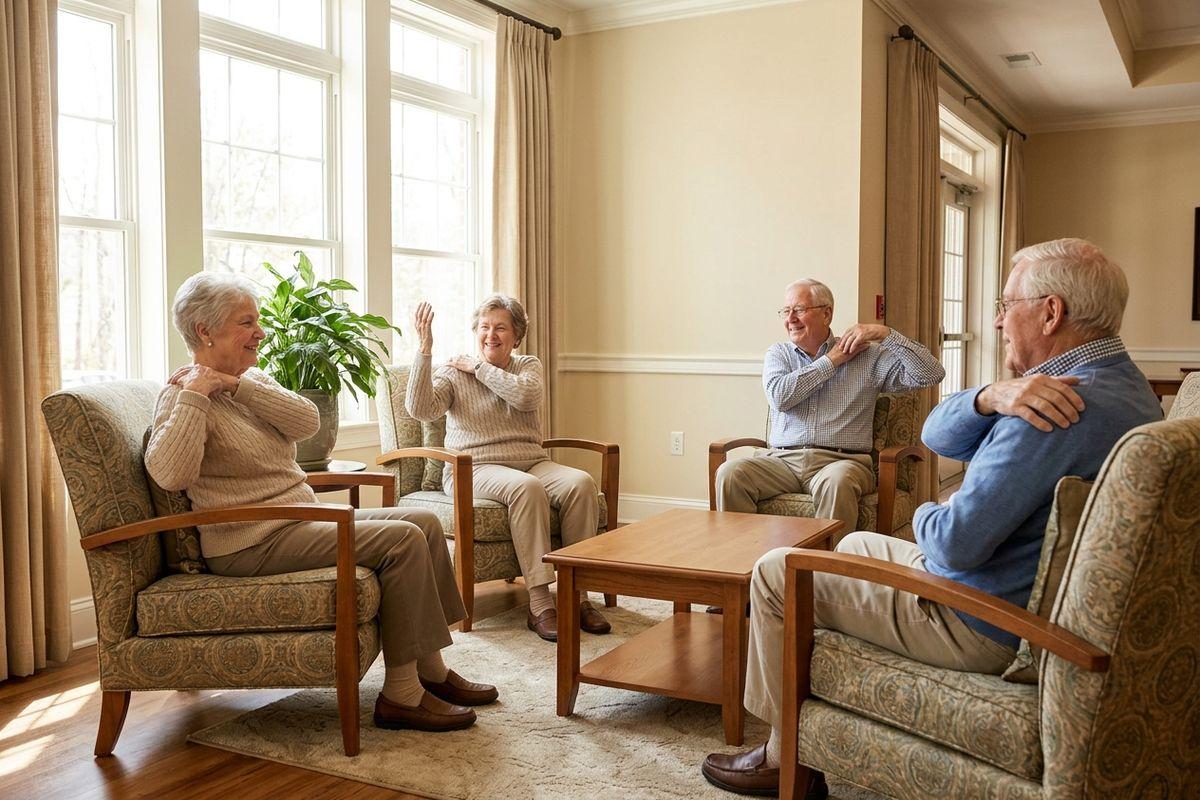
Chair-based routines let your loved one move arms, legs, and shoulders while seated, which works well for anyone rebuilding strength after time away from home. Gentle stretching sessions help loosen stiff joints and set a positive tone for the morning.
Balance and strength classes focus on steadiness, using light weights, resistance bands, and simple standing exercises. Instructors adjust each movement so participants can join at their own pace.

Walks and Outdoor Options
Walking clubs give structure to something your loved one may already enjoy. Groups head out together on accessible paths, and a garden stroll offers a quieter option for anyone who prefers going solo.
Outdoor spaces feature even surfaces, shaded seating, and handrails where helpful. Fresh air and sunshine come free with the trip, and the benefits of walking add up quickly.
Activities That Move Body and Mind
Some of the liveliest movement doesn’t look like exercise. Dance sessions, music-based programs, and games that involve tossing or reaching get people laughing while they move.
Hobby-based options work the same way. Gardening involves bending, lifting, and walking, and your loved one goes home with something they helped grow.
How to Plan an Active Respite Stay
A little preparation helps the team match programming to your loved one’s habits from day one:
- Write down their current activity level, including how far they walk and what support they use.
- Share their favorite routines, preferred times of day, and activities they’d rather skip.
- Pack comfortable shoes with good grip, plus clothing that they can move in easily.
Questions to Ask the Community
Before the stay begins, a few quick questions can clear up the daily details:
- The daily activity schedule and which classes are offered each week
- How much hands-on support is available during exercise
- Whether stay length changes which programs guests can join
- What outdoor spaces and walking areas look like
Bring the Momentum Home with Bentley Commons at Lynchburg
When the stay wraps up, the habits don’t have to. Ask which classes your loved one enjoyed and rebuild those movements into the week at home. Sharing notes with other family caregivers keeps everyone rowing in the same direction.
Our team at Bentley Commons at Lynchburg welcomes respite guests into the full rhythm of community life, from morning stretches to garden walks. Reach out to schedule a tour and see how a short stay could give your family a fresh start.