

Key Takeaways
- Anxiety in older adults often shows up as constant worry, restlessness, or trouble sleeping
- A calm voice and quiet presence can help more than explanations during an anxious moment
- Grounding methods like 3-3-3 and slow breathing help offer quick relief
- Steady routines, gentle movement, and social connection can ease anxious feelings over time
- Professional support helps when persistent worry lasts for weeks and disrupts daily life
- Senior living options can provide daily reassurance and social support for your loved one
Ways to Bring Comfort to an Anxious Loved One
You’ve noticed the phone calls come more often now. Your mom asks the same question 3 times before lunch, or your dad paces the hallway instead of settling into his chair. Watching someone you love feel uneasy can leave you searching for the right words.
Bentley Commons at Lynchburg understands how heavy those moments feel, and there are gentle ways to help, along with supportive senior living services when you need them.
You can help calm an older adult with anxiety by staying composed, speaking slowly, acknowledging their fear without arguing, and guiding them through simple grounding or breathing steps until the wave passes.
What Anxiety Can Look Like in Older Adults
Anxiety doesn’t always announce itself. Sometimes it looks like constant worry over small things, restlessness that keeps someone from sitting still, or nights spent staring at the ceiling instead of sleeping.
Physical signs show up too. A racing heart, trembling hands, or tight shoulders can all point to anxious feelings. You might also notice your loved one skipping card games, church, or the walks they used to look forward to every morning.
Common Triggers to Watch For
Knowing what sets off anxious feelings makes it easier to offer support. Keep an eye out for these common triggers:
- Health changes or new medications
- Mobility limits that make familiar tasks harder
- Losing a spouse, sibling, or close friend
- Money worries
- Poor sleep
When Panic Attacks Happen
A panic attack can arrive without warning, bringing sudden fear, chest tightness, or shortness of breath that is deeply frightening for both of you.
While it can be helpful to understand the differences between an anxiety attack—which typically builds gradually in response to a specific stressor—and a panic attack, which hits intensely and out of the blue, the immediate care in the moment is the same.
The reassuring part is that these intense moments almost always peak quickly and begin to ease. Simply staying nearby with a calm, steady presence until the storm passes can make all the difference.
How to Respond in the Moment
When anxious feelings rise, your presence matters more than the right words. Try these 3 steps:
- Stay calm and speak slowly in a gentle voice.
- Acknowledge the fear instead of arguing about whether it makes sense.
- Sit with them quietly and be ready to listen until the wave passes.
The way you speak matters as much as what you say, so keep your tone respectful and warm.
The 3-3-3 Method to Ease Worry
This simple exercise pulls attention back to the present moment. Walk through it together, slowly and out loud.
- Name 3 things you see, like a lamp, a photo, a coffee mug
- Name 3 sounds you hear, maybe a clock, a fan, birds outside
- Move 3 parts of your body, such as wiggling toes, rolling shoulders, stretching fingers
Simple Breath and Comfort Cues
Slow, deep belly breathing works well when you do it together. Breathe in, let the stomach rise, then breathe out a little longer than you breathed in. Your steady rhythm gives them something to follow.
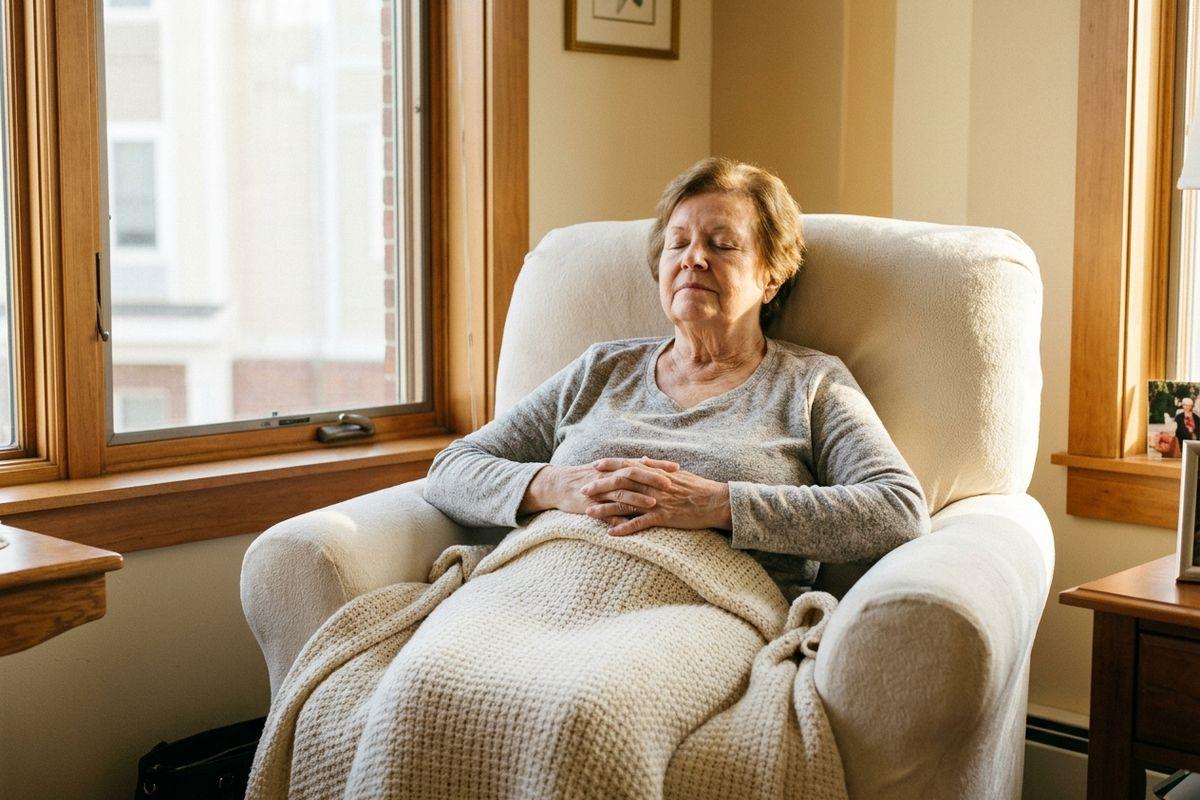
The room environment helps too. Soften the lighting, turn down the television, and bring over something familiar like a favorite blanket or a photo album from the shelf.
Everyday Habits That Ease Anxious Feelings
Small daily choices add up. A predictable routine with the same wake time each morning gives the day a shape your loved one can count on, and managing stress in older adults often starts with that kind of steady rhythm.
Gentle movement helps as well. A short walk after breakfast, some low-impact exercise, or 20 minutes on the porch in the afternoon sun can settle restless feelings. Cutting back on caffeine and skipping late-evening news watching helps make bedtime easier.
Social Connection as a Comfort Tool
Quality time with other people eases worry in a way few things can. Regular visits, a standing phone call every Sunday, or a weekly group activity for seniors gives your loved one something to look forward to.
Some people find comfort in support groups where others share similar experiences. Others lean on a trusted spiritual leader for quiet conversation and reassurance, and staying connected supports well-being in many ways.
Sleep and Hydration Basics
Rest and fluids both affect how anxious someone feels. Aim for 7 to 9 hours of sleep each night and keep bedtime consistent.
For evenings, a warm herbal tea or a glass of water works well. It’s a small step that supports calmer nights and healthy hydration for seniors.
When to Reach Out for Professional Support
Sometimes home strategies aren’t enough, and that’s okay. Consider reaching out when you notice any of these signs:
- Worry that lasts for weeks and disrupts daily life
- Skipped meals or refused outings
- Missed appointments
- Withdrawal from people they used to enjoy
A trusted health professional can open the door to helpful options, from talk therapy to other kinds of gentle support. Anxious feelings can overlap with depression in older adults, and having someone knowledgeable in your corner takes the guesswork off your shoulders.
How Bentley Commons at Lynchburg Can Help Your Family Feel at Ease
Senior living communities offer what anxious moments respond well to: steadiness.
Assisted living can bring daily support and familiar faces. Memory care provides calm routines for those experiencing cognitive changes. Respite care offers family caregivers short-term relief when they need a breather.
Small steps really do bring noticeable comfort. Bentley Commons at Lynchburg welcomes you to tour the community, ask any questions, and see what daily life could look like for someone you love. Reach out to one of our friendly advisors today.